+1 888 608-7511
Need help finding a standard?
Help Desk
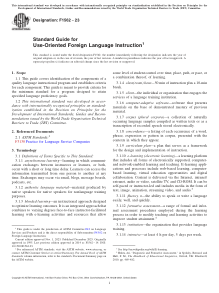
1.1 This guide covers identification of the components of a quality language instructional program and establishes criteria for each component.
This guide is meant to provide criteria for the minimum standard for a program designed to attain specified language proficiency goals.
1.2 This international standard was developed in accordance with internationally recognized principles on standardization established in the Decision on Principles for the Development of International Standards, Guides and Recommendations issued by the World Trade Organization Technical Barriers to Trade (TBT) Committee.
1.1 This guide covers identification of the components of a quality language instructional program and establishes criteria for each component. This guide is meant to provide criteria for the minimum standard for a program designed to attain specified language proficiency goals.
1.2 This international standard was developed in accordance with internationally recognized principles on standardization established in the Decision on Principles for the Development of International Standards, Guides and Recommendations issued by the World Trade Organization Technical Barriers to Trade (TBT) Committee.
4.1 This guide is intended to serve institutions for the development of instructional programs as well as to serve potential clients and students in the selection of a training program to meet their needs.
4.2 It may not be possible for a specific program to meet all of the components of the standard for every language. If the standard cannot be met for a given language, the institution will clearly inform the client and the student of that fact.
4.3 The following components are addressed:
4.3.3.1 These guidelines are not intended to be absolute. Individual cases may be influenced by a number of factors, including: individual language learning ability, prior language experience, native language, attendance, motivation, homework, exposure and reinforcement outside the classroom, and individual learning style.
4.3.9.1 These guidelines shall apply to advertising, such as print, broadcasting, and electronic media, as well as oral presentations.
Failed to load document history.
| Publish Date | Document Id | Type | View |
|---|